Digital
Money
In 800 AD, the Chinese
Yuan Dynasty first replaced coins with paper money. In 1971 Richard
Nixon took us off the gold standard. The value of paper money is easily
manipulated by countries and people such as JD Rockefeller and George
Soros. 68 times in the [past 100 years hyperinflation has devalued the
monies of 68 countries. Today we think of money as something tangible
and real, but it is not. What is the real difference between these 3
pieces of paper?



1.
Richard Rahn’s the End of Money (1996);
David Wolman’s The End of Money (2012); Thomas Greco’s the End of Money
(2009), Lietar & Dunne’s Rethinking Money (2013).

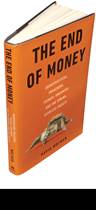
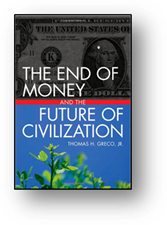
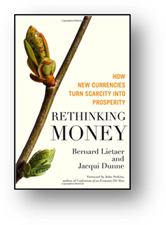
These books and others describe the many
problems associated with paper money, and the many potential benefits of
digital money.
2.
 Examples
of Digital Money:
Examples
of Digital Money:
·
Credit Cards
·
Debit bards
·
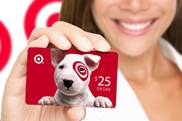
Prepaid Gift
Cards
·
Metro Coronet Tickets (Paris France)
·
The
Square (50 seconds)
·
NFC
i.
Google Wallet in Action -
http://www.youtube.com/watch?v=HEj2elwImqg (5:06)
ii.
Kim Komando on Mobile Payments -
http://www.youtube.com/watch?v=aEurC8AUB2Y (3:25)
3.
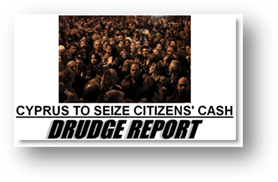
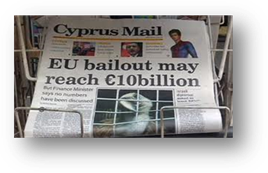
2013 Cyprus Banks seize billions. (Article)
4.
Imagine:
·
Making a person-to-person cash transfers
with your phone…
·
…with no transaction fees.
·
Your phone replaces your wallet (3
second video) (Google
Wallet)
·
The end of counterfeit money.
·
The end of inflation.
·
Your money kept where governments could
not touch it (ie: a Cyprus Bank).
·
Your money kept where governments could
not watch it.
·
Transactions that are truly private – no
more “Know Your Neighbor” programs.
6.
Bitcoin was introduced in 2009 by an
unknown person using the alias Satoshi Nakamoto as the world’s first
“global neutral” currency.
7.
Bitcoin is an electronic form of currency
which does not reply on a central government authority.
8.
You can use Bitcoins to avoid currency
exchange fees.
9.
You can use Bitcoins to avoid transaction
fees.
10.
Key Points:
·
Bitcoins are transferred electronically
via mobile payments.
·
Transactions are irreversible.
·
Transactions are not anonymous, all are
available for the public to see.
·
Recommended that you create a new address
for each transaction.
·
Double spending is prevented by using a
block chain.
·
Transactions are broadcast within seconds
and verified within 10 to 60 minutes.
·
Transactions can be received at any time
even when your computer is turned off.
·
Currently $300million in circulation,
40,000 transactions a day.